Wednesday, 8 February 2012
Problems with the iambic pentameter?
Actually, it´s like an ancient rap! (It comes from Greek poetry). Have a look at this link . Try also this one.

Wednesday, 1 February 2012
Shakespeare´s sonnet 116


Audio here. Text here.
SONNET 116
Let me not to the marriage of true mindsAdmit impediments. Love is not love
Which alters when it alteration finds,
Or bends with the remover to remove:
O no! it is an ever-fixed mark
That looks on tempests and is never shaken;
It is the star to every wandering bark,
Whose worth's unknown, although his height be taken.
Love's not Time's fool, though rosy lips and cheeks
Within his bending sickle's compass come:
Love alters not with his brief hours and weeks,
But bears it out even to the edge of doom.
If this be error and upon me proved,
I never writ, nor no man ever loved.
You must prepare a recitation of the sonnet for next Thursday. You´ll be evaluated on memorization, pronunciation and rhythm. For the pronunciation practice, listen to the poem carefully (link above). For the rhythm, remember the iambic pentameter pattern: the stressed syllables are the 2nd, 4th, 6th, 8th and so on.
Here you are a translation into Spanish that can help you to understand it better:
yo no admita impedimentos. El amor no es amor
si se altera al enfrentar la alteración,
o flaquea cuando el que parte se aleja:
¡Oh, no! Es un faro siempre en pie,
que ve pasar las tempestades y nunca es derribado;
es la estrella para el navío a la deriva,
de valor incalculable, aunque se mida su altura.
El amor no es juguete del tiempo, aunque el carmín de labios y mejillas
caiga bajo el golpe de su guadaña;
el amor no se altera con sus cortas horas y semanas,
sino que todo lo soporta hasta el final de los tiempos.
Si estoy errado, y que eso se pruebe,
yo nunca he escrito, ni ningún hombre ha amado.
Sunday, 29 January 2012
Friday, 27 January 2012
Australia Day or Survival Day? (E1C)

Do you remember Meghan´s presentation on Australia day? You must know the following key points, they may appear in our next literacy exam!
-What does the flag above represent?
-70% of Australian territory is .........................
-How many languages are spoken by Australian Indigenous nations?
-What happened in 1770?
-Who was James Cook? How did he die?
-What kind of people were the first European settlers?
-What is the "stolen generation"?
-What movement began in 1972?
-What was the "Tent Embassy"?
-Who was Mabo?
-Who is Kevin Rudd? What is his relation with this issue?
-We read the poem Let Us Not Be Bitter by Oodgeroo Noonuccal in class. Read it again (follow this link) and check the main topics and vocabulary.
Wednesday, 25 January 2012
Thursday, 19 January 2012
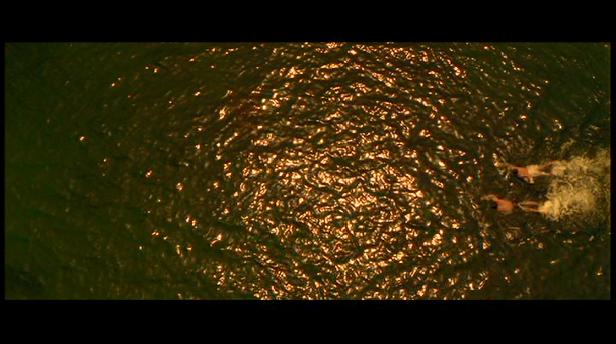
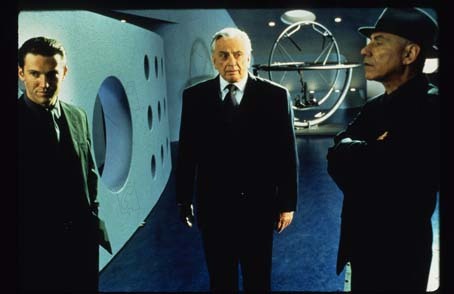
Gattaca stills




Toadaroo or Kangaroad, that´s the question.

Said the Toad to the Kangaroo,
"I can hop and so can you,
So if we marry we'll have a child
Who can jump a mountain or hop a mile
And we can call it a Toadaroo"
Said the hopeful Toad to the Kangaroo.
Said the Kangaroo, "My dear,
What a perfectly lovely idea.
I would most gladly marry you,
But as for having a Toadaroo,
I'd rather we call it a Kangaroad",
Said the Kangaroo to the frowning Toad.
These are some of the endings you have made up for the poem:
"Said the kangaroo to the toad
'my lovely toad,
why don´t we take your hand
and leave the lucky coin spin
while you pray hopping
in your mind'.
Finally the coin stopped
and hopefully the toad won". (by Víctor R.)
"In the end, someone had to give up
because they wished a little child
only one name could have
or one of the parents would become sad.
Said the toad to the kangaroo:
'But how are we going to have a baby?
That´s something that is making me crazy!'
Said the kangaroo:"I think you´re very lazy!
If a child you want to have, just we´ll call it Daisy'
So in the end Daisy the child was called.
It was a strange mixture of a toad and a kangaroo,
a strange child from a strange couple". (by Eva B.)
"They told a bird their story,
and the bird smiled happily.
'I have a plan
First, you have to calm.
If you have two babies,
I think maybe,
one could be called one way, the second the other,
they would be brothers'.
So since that moment for a lot of generations
they lived happily with the bird´s lessons". (by Lidia J.)
"So they argue all the days
because they want first their names.
Finally they stopped arguing.
They didn´t want to have a child,
they only wanted to marry
and have a happy life". (by David J.)
"As they disagree on each other´s idea
the toad went to Korea.
There he found a beautiful frog,
but she was in love with a dog!
So he continued looking for someone to love.
When he arrived in Japan,
he found a beautiful elephant.
But his father, who was very big,
wanted his daughter to marry a pig!
The toad returned to the kangaroo,
Their love was finally true.
So they got happily married,
and had one baby,
called Kangaroad,
as wished the toad." (By Paula J.)Good work to you all! I love your endings, they are much happier than Shel Silverstein´s. Here it is:
"So they argued but couldn't agree
On Rangatoo or Kangaree
And finally the Toad said, "I don't give a dang
If it's Rootakoad or Toadakang--
I really don't feel like marrying you!"
"Fine with me," said the Kangaroo.
And the Toad had no more to say,
And the Kangaroo just hopped away.
And they never married or had a child
That could jump a mountain or hop a mile.
What a loss--what a shame--
Just 'cause they couldn't agree on a name".
Wednesday, 18 January 2012
Gattaca quiz
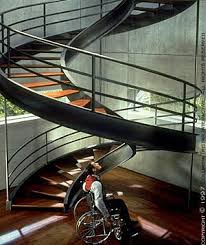
Hi B1A! Next week is going to be "Gattaca week": On Tuesday 24 we´ll do a quiz about the film. On Wednesday 25 Vanessa will do a presentation about the topic and on Friday 27 we´ll do the exam (2 points at stake!).
These are some of the questions I´ll make in the Tuesday´s quiz (the other questions are secret, but they all are about the plot):
-Would you like to live in a world like the one the film shows? Why/why not?
-What is Vincent´s key to success?
-Why hasn´t Vincent´s brother reached as far as Vincent having better genes?
-Why does Jerome commit suicide at the end of the film?
-Why does Vincent leave hair at his desk every day? Whose hair is that?
-What is special about the pianist in the film?
-What does Jerome have round his neck when he dies? Why?
-What is a "borrowed ladder"?
-What is a "God-child"?
-What do we discover about the doctor at the end of the film?
-Who murdered the man in Gattaca? Why did he do it?
-Watch the alternative ending of the film HERE and explain it.
-Which moment makes Vincent think he can achieve anything if he fights for it?
-Who is a "Valid"? and an "In-Valid"?
-What is the difference between Vincent and his brother Anton?
-Why was Vincent operated on his legs?
-Search for this information in the internet: Who is the director of this film? Say two other films he has directed. When was this film released?
We´ll do the quiz in groups, the two groups which get the most points will get extra marks.
"There is no gene for the human spirit"
Friday, 13 January 2012
Shel Silverstein´s Poem (E1C)
Said the Toad to the Kangaroo,
"I can hop and so can you,
So if we marry we'll have a child
Who can jump a mountain or hop a mile
And we can call it a Toadaroo"
Said the hopeful Toad to the Kangaroo.
Said the Kangaroo, "My dear,
What a perfectly lovely idea.
I would most gladly marry you,
But as for having a Toadaroo,
I'd rather we call it a Kangaroad",
Said the Kangaroo to the frowning Toad.
That´s the beginning of the poem we saw in class. Remember to write an ending for Monday (use alliteration and rhyme). The best titles for the poem are:
-"Strange Lovers" (by Elena R.)
-"A complicated pair" (by Eva B.)
-"Toad vs Kangaroo (in Love)" (by Jorge O.)
-"Impossible name" (by Daniel P.)
-"The two frowning animals" (by Esther L.)
The title is "The Toad and the Kangaroo", not very original (I prefer yours!)
Don´t forget the legend presentation for Monday. Have a nice weekend!
"I can hop and so can you,
So if we marry we'll have a child
Who can jump a mountain or hop a mile
And we can call it a Toadaroo"
Said the hopeful Toad to the Kangaroo.
Said the Kangaroo, "My dear,
What a perfectly lovely idea.
I would most gladly marry you,
But as for having a Toadaroo,
I'd rather we call it a Kangaroad",
Said the Kangaroo to the frowning Toad.
That´s the beginning of the poem we saw in class. Remember to write an ending for Monday (use alliteration and rhyme). The best titles for the poem are:
-"Strange Lovers" (by Elena R.)
-"A complicated pair" (by Eva B.)
-"Toad vs Kangaroo (in Love)" (by Jorge O.)
-"Impossible name" (by Daniel P.)
-"The two frowning animals" (by Esther L.)
The title is "The Toad and the Kangaroo", not very original (I prefer yours!)
Don´t forget the legend presentation for Monday. Have a nice weekend!
Saturday, 7 January 2012
Gattaca

You are going to watch the trailer of the film Gattaca. Read these questions, you´ll have to answer them after watching it:
-What´s genetics?
-In the future, what will determine everything about us?
-How many fingers have the hands we can see in the trailer got? Why?
-Why will a drop of blood, saliva or a single hair be so important in the future?
-In that future society, what will determine success?
Trailer here (go to "clips" and then "trailer").
Tuesday, 3 January 2012

Wednesday, 21 December 2011
A scary story (3A)

It was a cold night, I only heard the noise of the birds and the cars. I was reading in my bedroom when I heard a scream, the scream broke the silence of the night. I was very scared, I went to the window and I saw the street, there was a lot of fog, but I could see the figure of a girl, about 8 years old with a teddy bear in her hands. I was tired so I went to my bed.
The next morning I told the story to my friend, Jack, he said that we could go to the street to investigate it. When we arrived at the street we saw an old man, I asked him if he´d seen something strange, but he told us a story.
"10 years ago, a couple lived in a house in the forest, with their daughter Amanda, but they hadn´t got much money, and they hit Amanda. One night she left the house but she got lost and the police never found her corpse, only her teddy bear. The people say that at night you can see a girl walking in the forest, looking for her teddy bear".
When he finished the story, Jack and me left, I arrived at my house very late, but my mother had a surprise for me. "I have a present for you", she said to me, and she gave me a box. I opened it and I saw a small teddy bear. "Thanks mum", I said.
At night, I was sleeping when I heard a noise, I got up and saw a girl in a nightdress with blood and she spoke with a terribe voice:
"I want my teddy bear..."
(Amanda´s teddy bear by Miguel Z., 3A).
Thursday, 15 December 2011


Wednesday, 14 December 2011

Monday, 5 December 2011
Oscar Wilde (Leila´s presentation)

Oscar Wilde (1854 – 1900) was a proponent of the Aesthetic movement, which emphasized aesthetic values more than moral or social themes. This doctrine is most clearly summarized in the phrase 'art for art's sake'.
Oscar’s
Mother made a huge impression on his life. However she was an upright catholic
and Wilde struggled in sharing her ideals. Wilde was very sceptical of the
church, especially by the stronghold it had in Irish society and this is
obvious in his literary works.
Early
life
Oscar
Wilde was born
in Dublin on 16
October 1854 to Sir William Wilde and his wife Jane. Oscar's mother, Lady Jane
Francesca Wilde (1820-1896), was a successful poet and journalist. She wrote
patriotic Irish verse under the pseudonym "Speranza". Oscar's father,
Sir William Wilde (1815 - 1876), was a leading ear and eye surgeon, a renowned
philanthropist and gifted writer, who wrote books on archaeology and folklore.
Oscar had an elder brother, Willie, and a younger sister, Isola Francesca, who
died at the early age of 10.
Education
He was
educated at Portora Royal School
(1864-71), Trinity College, Dublin
(1871-74), and Magdalen College, Oxford
(1874-78). While at Oxford,
he became involved in the aesthetic movement and became an advocate for 'Art
for Art's Sake' (L'art pour l'art). Whilst at Magdalen, he won the 1878
Newdigate Prize for his poem Ravenna
On May 29,
1884, Oscar married Constance Lloyd (died 1898), daughter of wealthy Queen's
Counsel Horace Lloyd. They had two sons, Cyril (1885) and Vyvyan (1886). To
support his family, Oscar accepted a job as the editor of Woman's World
magazine, where he worked from 1887-1889.
Scandal
In 1891,
Wilde began an affair with Lord Alfred Douglas, nicknamed 'Bosie', who became
both the love of his life and his downfall. Wilde's marriage ended in 1893.On 25 May 1895 Wilde and Bosie were convicted of gross indecency and sentenced to two years' hard labour.
Later
life
Upon his
release in 1897, he wrote The Ballad of Reading Gaol, revealing his concern for
inhumane prison conditions. He spent the rest of his life wandering Europe, staying with friends and living in cheap hotels.
He died of cerebral meningitis on November 30, 1900, penniless, in a cheap Paris hotel.
Wilde’s works:
•
The
Happy Prince and Other Tales (1888)
•
The
Picture of Dorian Gray
(1890)
•
Lord
Arthur Saville’s Crime and Other Stories (1891)
•
Lady
Windermere’s Fan (1892)
•
Salomé (1893)
•
A
Woman of No Importance
(1893)
•
An
Ideal Husband (1895)
•
The
Importance of Being Earnest (1895)
•
The
Ballad of Reading Gaol
(1898)
•
De
Profundis (1905)
Words to
describe Oscar Wilde
•
Eccentric
•
Flamboyant
•
Witty
•
Humorous
"Always forgive your enemies -- nothing annoys them so much".Picture: Statue of Oscar Wilde in Dublin.
By Leila Islam.
Subscribe to:
Posts (Atom)